


BLOG
10 Tips to Manage a Packed College Schedule
Waking up at 7 am to shower, get dressed, grab coffee (or for those more put-together than me, breakfast), and get to your 8 am class is hell on earth, there’s no good way to spin it. Sure, getting out of bed early and getting going does make you feel good and productive once you’ve done it, but the Pavlovian response to that alarm clock in the morning is just not worth it. How did I used to get up at 6 am every day for school at 6:40 am in high school and stay there until 7 pm? I have no idea. But busy days in college are very different from busy days in high school, and they require a different approach in order to maintain your sanity.
Here are a few tips and tricks from yours truly (a super-organized-not-messy-at-all person):
Eat breakfast. My roommate will say I’m a hypocrite for this one, but it’s a “do as I say, not as I do” kind of tip here. Most days I skip breakfast and feel extra anxious all day from it. Eating breakfast (or even just a quick banana) is guaranteed to make you feel awake and ready for classes, organization meetings, and homework - science says so. So get the coffee but grab something to eat with it.
Do your homework beforehand. And by beforehand, I do not mean the morning-of. Even the night before is fine, but the second you decide you’ll “get up early and do it” you’re screwing yourself over. I promise it’s more work than you think and that 30 minutes in the morning isn’t gonna cut it. Ideally, you’d (I’d) have it done a day or so in advance, but from personal experience, I know that is often unrealistic. But cut yourself off at 3 am.
Check your email and delete emails that are not relevant. Waiting until you have 200 unread emails that clog up your inbox and hide emails from professors is a mistake I have made many a time and it always ends poorly or in me taking forty-five minutes to sift through my inbox to find anything I actually need. Keep the inbox clean - professors email as often as your friends’ text.
Speaking of emails, respond to them as soon as you can. Don’t worry about responding too quickly, if you have time to bang out a response right when you read it, do that. It saves you tons of stress in the long run because nothing will be weighing on you and you won’t worry about forgetting to respond.
This one should be obvious but make a checklist every day. Buying a planner can help, but often you’re going to forget about it or not feel like pulling it out. So make a to-do list on your notes app or on a sticky note or a scrap of paper. Crossing out tasks will make you feel awesome.
If you have extra work to accomplish, don’t save it until the end of the day when you get back to your dorm — do it in between classes. Not only does being in study spaces help you stay focused, but when you get home at night, you’ll have so much less to worry about and you’ll thank yourself (you can go watch Outer Banks or something).
Use meal times as your breaks to see your friends. You really don’t want to be doing your lab science homework while you’re shoveling down the dining hall’s build-your-own-tacos between classes. Save that time to socialize and recharge before going back to your day.
If you have to write a paper, PLAN IT. College papers are going to be different from high school papers, and if you have a ten-page paper due, waiting until the day before it’s due to even think about it is a suicide mission. Make an outline, start your paper at least a few days in advance, even if it’s just the introduction paragraph. You’ll do better.
Ask for extensions if you need them. Obviously don’t do this TOO often, but most professors are pretty reasonable people and will give you an extension if you don’t ask the night before it’s due (sometimes even then if it’s urgent). There’s no shame in asking, and the worst they can say is no.
If you’re having trouble balancing your social life with school, do homework with friends (but don’t let it be too chatty). Doing homework with friends is simultaneously very helpful yet occasionally detrimental. It’s very easy to get distracted with your friends around, but if you and your friends can focus well enough, it can become more fun to accomplish your work.
Reflecting on these tips, I have been trying to incorporate these into my own life, especially in this upcoming junior year, and I wish I had done more of this freshman and sophomore year. Developing good organizational skills is key to succeeding in college, and even if these tips don’t work for you, you will eventually find your groove and ultimately balance your school and social life.
Having busy days (pretty much every day for some people) is just a part of being at school and it doesn’t have to be intimidating. My friends will sometimes take naps in academic buildings. No one is doing everything perfectly, and taking breaks is vital — even if that means sleeping in a study lounge for a quick minute. Eat, sleep, and complain about how busy you are to your friends. And do your homework probably.
All love,
Megan Adams, Syracuse ‘23
P.S. The syllabus is your friend. Your professors will usually remind you when deadlines are approaching but do NOT rely on them doing so. They expect you to follow the syllabus and be prepared every day. Printing out all your classes’ syllabi is extremely helpful.
The Dreaded First Week of College
Hi,
My name is Megan, and I am entering my junior year at Syracuse University as an Advertising major with a creative emphasis and a psychology minor in the Newhouse School of Public Communications. Anyways, now that you know me by the way I introduce myself in any classroom on the first day, I’ll tell you a little bit about my first week of college at Syracuse University.
First thing’s first - when your parents drop you off, it is fully acceptable to sob violently and be inconsolably upset. Most people are in a horrible mood their first day anyway, you’ll be in the majority. There’s a moment after your parents leave for the first time that it really hits you that you’re legitimately on your own. No friends, no family, just you and your comfort water bottle. (Sidebar: I got a free water bottle from ‘Cuse my first week from some orientation event and I have had it for two years now and it is still my favorite water bottle. It has housed every single beverage you can possibly think of and has given me an excuse to get up and leave class to fill it up if I got bored. Very useful.) Once you’re left to your own devices, parents gone, what next?
My next move, being strategic and courageous and independent of course, was to call my mom. On her drive home. After twenty minutes. I’m honestly impressed I lasted even that twenty minutes, but there was a lot of crying. I would like to state for the record there is no shame in calling your mom after 20 minutes or even 5 minutes. Do what you gotta do. But I can promise eventually you will not want to call your mom because you’ll actually be having fun.
Fun seems very impossible the first week and even the first whole semester of college, but I swear it’s possible. For context, I am an insanely introverted person and Syracuse is an insanely extroverted school. If you’ve visited Syracuse or even heard of Cuse Basketball, you know what I mean. School spirit out the you-know-where. Me? Not so much. At least I wasn’t like that my freshman year. But your first week is prime time to make friends — EVERYONE is desperate to make friends, so if you talk to even one stranger on your floor or at an orientation event, chances are you’ll end up getting dinner together because neither of you have any other friends. And as pathetic as that sounds, it WILL turn out to be a good time.
Another sidebar because I won’t shut up about myself: my dorm building freshman year (Sadler floor 6, shoutout) had a GroupMe. If yours doesn’t have one, I would highly recommend putting a link to make one in your Facebook group for your class. Very helpful. But I digress; I woke up the morning after my first night alone and I texted in the group asking if anyone wanted to get breakfast with me. Three girls answered and went with me to breakfast. This was hands-down the worst, most awkward breakfast of my entire life. Not only was I so socially insecure, but I also felt like I was the ugliest one there (this obviously was not true and I know that now, but all the other girls with me were skinny and blonde, so you can see where I would be a little insecure). I barely ate, and I did not make any friends at this gathering I had instigated. Good job, Megan. I left very defeated, but I can tell you a full two years after this happened, I am now coincidentally friends with one of the girls from that breakfast. She also remembers it as the breakfast from hell, which is a comfort to me.
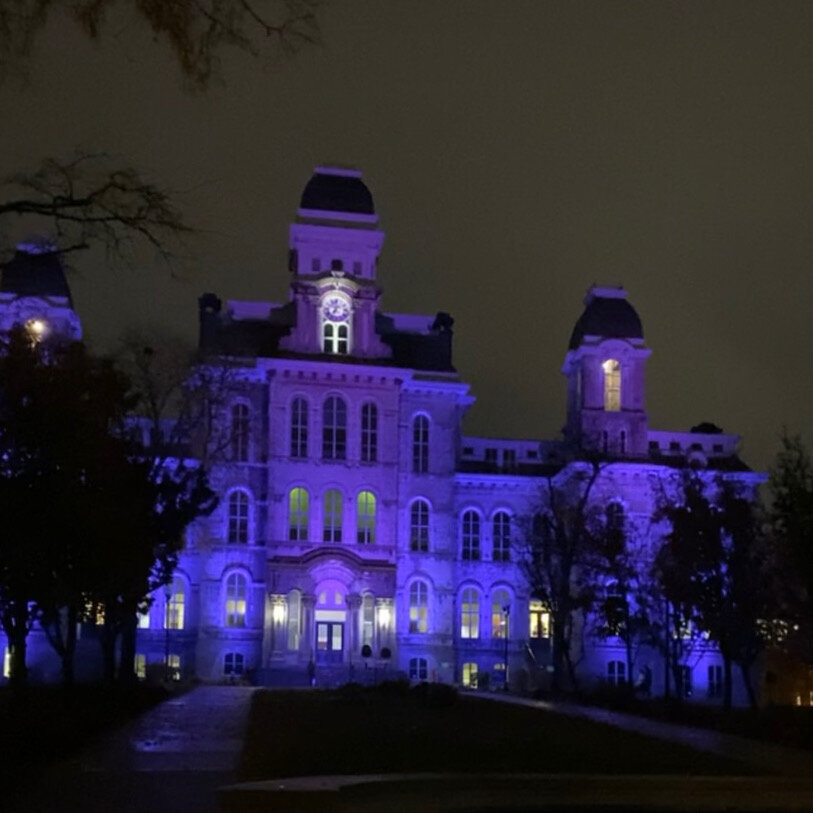
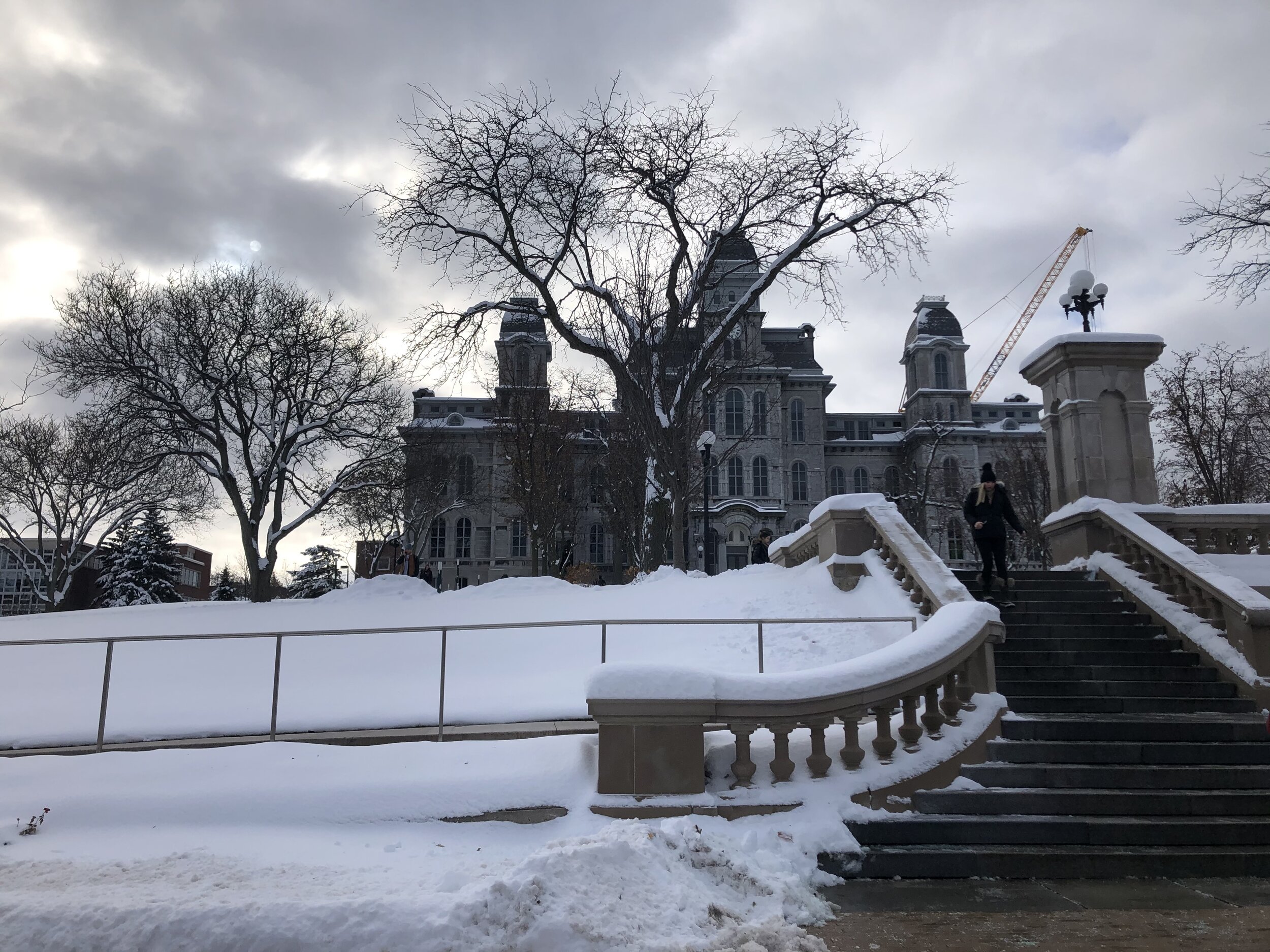
Back to my main point. You will make friends, but it might not be right away and that’s ok. My two best friends were friends I made my sophomore year. Another reason your first week SUCKS. As an introvert I was physically FORCING myself to do stuff like invite people to breakfast (never again), go to little orientation events, and talk to people in my classes. This was so GD painful for me but somehow I muscled through and made a few friends on my floor and two of my best friends in an intro class where we bonded over reading Harry Potter (yes, I am embarrassed) instead of anything remotely intellectual like the rest of the class.
Despite finally being able to make friends on campus, I wanted to share the MOST pathetic part of my first week at college, who knows, maybe this will make other people feel better! Or worse, who can tell. Anyways, it was my very first night alone and after a full day of moving in and then sobbing on my bed having a pity party, I was wiped out and I just wanted to sleep. I got my pajamas on and got in bed, my roommate hadn’t moved in yet, so I was alone alone. My brain decided sleeping was actually very dangerous and not ok for me to do in any circumstance. Locked door? Doesn’t matter. We’re on the sixth floor? Irrelevant. I will be murdered tonight. I decided since I had been trying to fall asleep for three hours, it was time to just pull an all-nighter because clearly I wasn’t sleeping. I watched YouTube videos for a long time, debated calling my mom but didn’t want to wake her up, and none of my home friends would be awake, so there I was. Suddenly, an idea struck me. An idea that I am proud of but was probably very weird of me to do. At 4 am, I decided, let me hop in the shower. Why you ask? I raise you, why NOT? I cried a lot during this entire experience, just for context, and the shower was not an exception. But when I got out, I felt so much better, though I’m not sure the science behind that. I’m in communications so if anyone would explain it to me, I’d happily accept. So I guess what I’m saying is, crying in the shower at 4 am is acceptable and even encouraged behavior. It does help if you’re truly out of options on what to do with yourself.
I guess I should wrap this up because if there’s a word count, I have definitely exceeded it. I’ll leave you with a few first-week tips:
Go to every orientation event you can — you will make friends there. Drag your roommate with you!
Find out about club/organization applications ASAP. I found out about a specific club application 30 minutes before it was due and the org now consists of all my best friends.
No one is judging you like you’re judging yourself. Everyone is a self-involved narcissist, so don’t even worry about “saying the wrong thing.” Chances are, they’re trying to figure what to say back to YOU.
If you’re introverted or just a nervous person (both me), drag your roommate with you to things first week. You’ll both benefit, it’s easier meeting new people with someone else, and you and your roommate will get to get to know each other.
Not liking your roommate is not the end of the world AS LONG AS you can cohabit the same space and be polite to each other. You absolutely don’t have to be besties with your freshman year roommate.
Congrats to you on getting into college, and I wish you the very best of luck. And if you’re going to Syracuse specifically, I’m psyched for you. Have blast wherever you end up, I promise it gets better than that first week.
All love,
Megan Adams, Syracuse ‘23
Do These Things to Get Along with Your College Roommate

The college dorm experience is an exciting one. Finally, you have some newfound independence and a number of like-minded peers living close to you. Of course, no one will be living closer to you in distance than your roommate. We’ve put together some simple, but very important strategies to help you with the transition of having a roommate.
Be Transparent with Your Roommate—Starting from Day One
Set some expectations or a few key rules that you and your roommate both follow. Like to keep your room clean? Maybe the two of you can agree that Wednesdays and Sundays are your cleaning days. Assign roles so that you’re both contributing. Is Friday your night in and Saturday your night out? Then designate Saturday nights for when you two can have guests over. These are important conversations to have from the very beginning. As new situations arise, continue to be transparent so issues don’t bubble up. This is a skill you’ll need not only for dorm living, but for life. You’ll never know unless you ask, and your roommate will never know unless you speak up. If you need an outside opinion, contact your RA for guidance.
Be Considerate of Each Other’s Circumstances
Whether you and your roommate are best friends or not, it would be nice to regularly ask them about their day and how they’re doing. This could help build a stronger connection and make you both more empathetic in your room. For example, if your roommate’s responsibility on Sunday is to vacuum and you know he has two big tests that Monday, you could step up and take on vacuuming duties that day. If he’s been frustrated at how difficult it’s been to make friends, ask him to come to the dining hall with you and your friends. Having some basic understanding of each other’s lives can lead to small and meaningful actions.
Roommates Versus Best Friends
In an ideal world, you have a great roommate who is also your best friend. However, this isn’t always the case. Understand that you can have a great roommate who isn’t your best friend or a best friend who isn’t a great roommate. There will be plenty of chances to live with other people in the future if this isn’t the perfect living match. No matter what, be respectful and responsible during the year you’re living together. It will be nice for each of you to have a friendly face around campus when you inevitably see each other again.
Four Big Mistakes You Should Avoid in the Application Process

Second-semester junior year is when many students start thinking about the college application process (no, you’re not late)! You may be sitting at your computer, unsure of what factors to begin considering. Before you dive in head-first, understand the four mistakes that high school students and families make when applying to college.
Don’t start the process too late. By that, we mean you should start now especially if you’re in your junior year. To apply to college, you fill out an application online in the fall of senior year, send colleges your transcripts, and send your standardized test scores. To complete a quality application, however, takes much more. It’s choosing courses in your high school curriculum that show colleges you’re academically prepared. It’s having a testing plan so you can do your best on the SAT or ACT, which can potentially add value to your application. It’s taking the time to think deeply about how you will express yourself to admission officers in 650 words or less in the college essay. It’s considering a wide range of colleges on factors that are important to you, such as class sizes, affordability, and campus culture. These tasks require time and reflection. Get moving now so you won’t have to make all these choices in the heat of application season during your senior year.
Don’t get hung up on just one or two schools and disregard all the others. Students and parents can sometimes fall in love with a school, and they even call it a “dream” school. It’s great to feel like you connect with a campus while also understanding that admission and affordability aren’t guaranteed--even for the most highly-qualified applicants. In fact, selective institutions have to deny many students each year because of the vast pools of strong candidates around the world versus dorm beds available. Have a balanced mix of safety, target, and reach schools. Do the research to evaluate if they (including the safeties) are a good fit for you before making judgments on the schools! Understand that you can get accepted, have a fulfilling college experience, and experience excellent post-graduate outcomes at a number of places, not just one or two. Understand that a school’s lower admission rate doesn’t always correlate to a better student experience. You significantly reduce the pressure on yourself when applying if you can keep these factors in mind.
Don’t wait until the spring of senior year to take affordability seriously. Parents: have an early, honest conversation with your students about paying for college. Keep this dialogue going throughout the process. Work together to find colleges that award generous merit scholarships or tuition discounts for applicants. Students: consider a range of schools so you can see different financial aid packages before deciding (packages come out after you are admitted). When you address affordability early, it will save your family from unwanted surprises during an exciting, memorable time.
Don’t change yourself to try to fit into what colleges are “looking for.” Our staff has heard many admission officers echo this message. Some even say it’s the biggest mistake they see applicants make. Admission officers want to hear about each student’s unique interests, values, and stories. That means there isn’t a specific activity you have to join to qualify for a school. There isn’t an essay topic you can write about that will guarantee your admission. At many selective colleges, admission officers aren’t just checking boxes off when reading your application. It’s a real human being trying to weigh your qualifications and the school’s student enrollment objectives.
Instead, expand on the things you genuinely enjoy. Passionate about saving the planet from global warming? Think of a new project you can take on that will properly show this. Love coding and helping others? Consider starting a free course to share your interest with people who also want to get into coding. One admission officer from Pomona College in California advised high school students to “obsess over high school” rather than do things for college. We couldn’t say it better ourselves.
DO enjoy the process. Applying to college is an excellent way for high school students to mature and come of age. It naturally comes with twists and turns, but avoiding these four mistakes will make the process smoother and lead to better results. Take a deep breath and get the ball rolling as soon as you can.
INTERVIEW: How to Prepare for a Career in Computer Science, from an Amazon Employee
Computer science has been one of the most popular majors across colleges in recent years. If you're interested in studying it, what experiences should you think about in high school and college? How do you know which specific fields of computer science are right for you? As part of College Matters' Student to Student series, we interviewed our former student Vikram to talk about his path from high school to getting a job at Amazon after college.
*NOTE: Vikram’s experience of easily transferring into a computer science major isn’t universal. Please understand that schools will approach this on a case-by-case basis.
Helpful Steps to Improve Your Test (and Other) Performances

We often listen to students say they are particularly anxious for important exams, games, or performances. While performance coach Dr. Ben Bernstein says some anxiousness can be beneficial for people to perform their best, being overanxious can have a significant impact on performance even when a person is totally capable of doing well.
According to Bernstein, you should think of your performance as a three-legged stool. He calls these legs the Pillars for Performance. When one leg is unstable, the whole stool becomes unstable. When all three legs are working, the stool (your performance) becomes very sturdy. The first pillar is being Calm. Have you ever noticed when you’re stressed that you get shortness of breath or even forget to keep breathing? This is your body going into fight, flight, or freeze mode. Bernstein says consistent and deliberate breathing during a performance is one of the easiest ways students can stay calm. Students should also stay grounded. Have your feet connected to the floor and let gravity push you down. We tend to tense up our bodies and our shoulders when we’re stressed instead of relaxing and staying grounded. The third way to stay calm is to do what Bernstein calls sensing. Let your eyes rest for a few seconds. Engage your other senses. You should always be using at least two of your senses so that you can tune out of your head and tune into where you are.
His second pillar is Confidence. To be confident, you first need to confide in yourself. Be honest with yourself—what is it that you’re truly feeling negative about in relation to this performance? Once your problem is out in the open, it’s time to squash your doubt. Reflect and state a true positive success that you’ve had in this area. For example, if you’re taking the SAT and feeling anxious about a particular math section, reflect on a time where you worked on these exact same problems and were successful. If you did it then, you can do it now. Now that you know you can do it, envision in your mind the small steps you’ll need to take to go from a negative state to a positive state. Envision yourself being successful and that will breed confidence.
Bernstein’s third pillar is Focus. To focus, you should have a goal or target. This goal should be yours and no one else’s. Why are you doing what you’re doing right now? What are potential distractions on the way to this goal? Envision yourself trying to reach your goal with those distractions. Ask yourself, will those distractions help you reach your goal? The answer is always no. Then stop the distractions right then and there and start listening to the voice inside you that will tell you exactly what you need to do to get on track. See yourself listening to those directions. Push yourself to take those directions that you know are good for you.
So there you have it. The three Pillars for Performance are Calm, Confidence, and Focus. If you’ve done the proper practice and preparation leading up to your performance, you can perform up to your potential. This means not only doing the practice problems/exercises/run-throughs but also practicing these three pillars again and again so it becomes natural in crunch time. These strategies can certainly help in many areas outside of testing and games to help us feel better. Remember it’s good to be a little anxious. It means you care about what you’re doing. When it gets to be too much, make sure you’re aware of that and use Bernstein’s tools to get on the right track.
INTERVIEW: What You Should Know Before Considering a Music Conservatory
How much should I practice my instrument? What groups should I join to prepare for the next level? Is a conservatory too much for me? As part of our Student to Student series, we interviewed our former student Carson to talk about his experience as a music conservatory student.
INTERVIEW: Considering Playing a College Sport? Watch to See If It's Right For You!
High school students considering a college sport often overlook all that goes into it: recruitment, time commitment, school fit, and level of play. As part of our Student to Student series, we interviewed our former student-athlete Kaitlin to help you figure out if college sports is right for you and how to differentiate yourself from other recruits.
College Matters Class of 2021 College Acceptances

We are so proud of all our students in the Class of 2021! Here is where our students have been admitted so far.
Adelphi University
American University
Arizona State University
Bard College Barnard College
Boston College
Boston University
Bowdoin College
Brandeis University
Brown University
Bucknell University
Carleton University
Case Wester Reserve University
Catholic University of America
Central Connecticut State University
Clark University
Clarkson University
Clemson University
Coastal Carolina University
Colgate University
College of the Holy Cross
Colorado School of Mines
Colorado State University
Columbia University
Connecticut College
Cornell University
Curry College
Dean College
Dickinson College
Drew University
Drexel University
East Carolina University
Eastern Connecticut State University
Elon University
Embry Riddle Aeronautical University-Daytona Beach
Emory University
Endicott College
Fairfield University
Fashion Institute of Technology
Florida Atlantic University
Florida Institute of Technology
Fordham University
Franklin and Marshall College
Furman University
George Mason University
George Washington University
Georgetown University
Georgia Southern University
Gettysburg College
Goucher College
Grinnell College
Harvard University
Haverford College
Hobart William Smith Colleges
Hofstra University
Illinois Institute of Technology
Indiana University-Bloomington
Iona College
Ithaca College
James Madison University
Keene State College
Lafayette College
Lasell University
Lehigh University
Loyola University Maryland
Macalester College
Marist College
Massachusetts College of Pharmacy and Health Sciences
Merrimack College
Miami University-Oxford
Michigan State University
Middlebury College
Muhlenberg College
Nazareth College
New York University
Northeastern University
Northwestern University
Oberlin College
Pennsylvania State University-Harrisburg
Pennsylvania State University-University Park
Plymouth State University
Providence College
Quinnipiac University
Rensselaer Polytechnic Institute
Ringling College of Art and Design
Rochester Institute of Technology
Roger Williams University
Rutgers University
Sacred Heart University
Saint Joseph’s University
Salve Regina University
Sarah Lawrence College
Siena College
Skidmore College
Smith College
Southern Connecticut State University
Stanford University
Stony Brook University
SUNY at Geneseo
Syracuse University
Temple University
The University of Tampa
The University of Tennessee
Tufts University
Tulane University
Union College
University at Buffalo
University of Arizona
University of British Columbia (Canada)
University of California-Los Angeles
University of California-Santa Barbara
University of Colorado-Boulder
University of Delaware
University of Denver
University of Edinburgh (UK)
University of Exeter (UK)
University of Georgia
University of Greenwich (UK)
University of Hartford
University of Maine
University of Maryland-College Park
University of Massachusetts Amherst
University of Miami
University of New Hampshire
University of New Haven
University of North Carolina at Chapel Hill
University of North Carolina-Wilmington
University of Notre Dame
University of Oregon
University of Pittsburgh
University of Rhode Island
University of Richmond
University of Rochester
University of Saint Joseph
University of Scranton
University of South Carolina-Columbia
University of St Andrews (UK)
University of Vermont
University of Virginia
University of Waterloo (Canada)
University of Wisconsin-Madison
Villanova University
Wagner College
Wesleyan University
West Virginia University
Western Connecticut State University
Western New England University
Wheaton College-Massachusetts
Widener University
Wofford College
Worcester Polytechnic Institute
Yale University
Yeshiva University
How I'll Choose My Next Doctor

She sees the future.
This past week I talked with two young women about their college choices. Both have worked extremely hard in high school and achieved great things. Both have been recognized for their achievements with some amazing college acceptances. And both are committed to becoming doctors.
I believe that both will achieve that dream, and I'm hopeful that they will, because they will be the type of doctors that I want to take care of me in the future! Let me explain...
I work with a lot of students that apply to medical school. Many make it in, while others pivot to another health care field. And the reason that they pivot is that they didn't think ahead. You see, the most critical components of a successful med school application are undergraduate GPA and MCAT scores. Without those, your application simply won't move forward. But that’s just the beginning. Med schools love to see research, excellent recommendations, and relevant clinical experience as well -- after all, medicine is a caring profession (or should be).
So what did these young women do to elicit my desire to have them for my doctors in the future? They saw the bigger picture.
They've chosen to attend not the college that is highest in the rankings or that all of their friends drool over, but the school where they will have the most opportunities. The school where they won't just be in the middle of the pack in Organic Chemistry, but where they will ace it. The school where their professors will throw research opportunities at them and most likely will swoon over them in a recommendation. Where they will most likely get a strong committee letter and the full support of their pre-med advisor. Where they will still be challenged but not overwhelmed.
You see, I want my future doctor to be able to step back and see the bigger picture. To plan ahead and be thoughtful. To not be distracted by the "shiny thing," but know what is most efficient and effective. And to care and be committed. Get ready med schools; I've got two gems coming your way.
Have a question for a future “Ask the Consultant” post?
IN the Archive
- 5 Reasons 13
- Affordability 23
- Application Tips 11
- Ask the Consultant 52
- Athletes 6
- Career 7
- College Decisions 9
- College Visit 24
- Essay Writing 26
- Events 1
- Gap Year 3
- Grad School 8
- In the News 18
- Interviews 8
- Learning Differences 5
- Music 1
- News 28
- On the Road Again 6
- Parents 11
- Preparing 148
- Press 2
- Resume 9
- Starting Early 23
- Student to Student 16
- Testing 24
- Transfer 5
- Virtual Learning 2