


BLOG
5 Reasons to Love Swarthmore College!
Pass/Fail First Semester
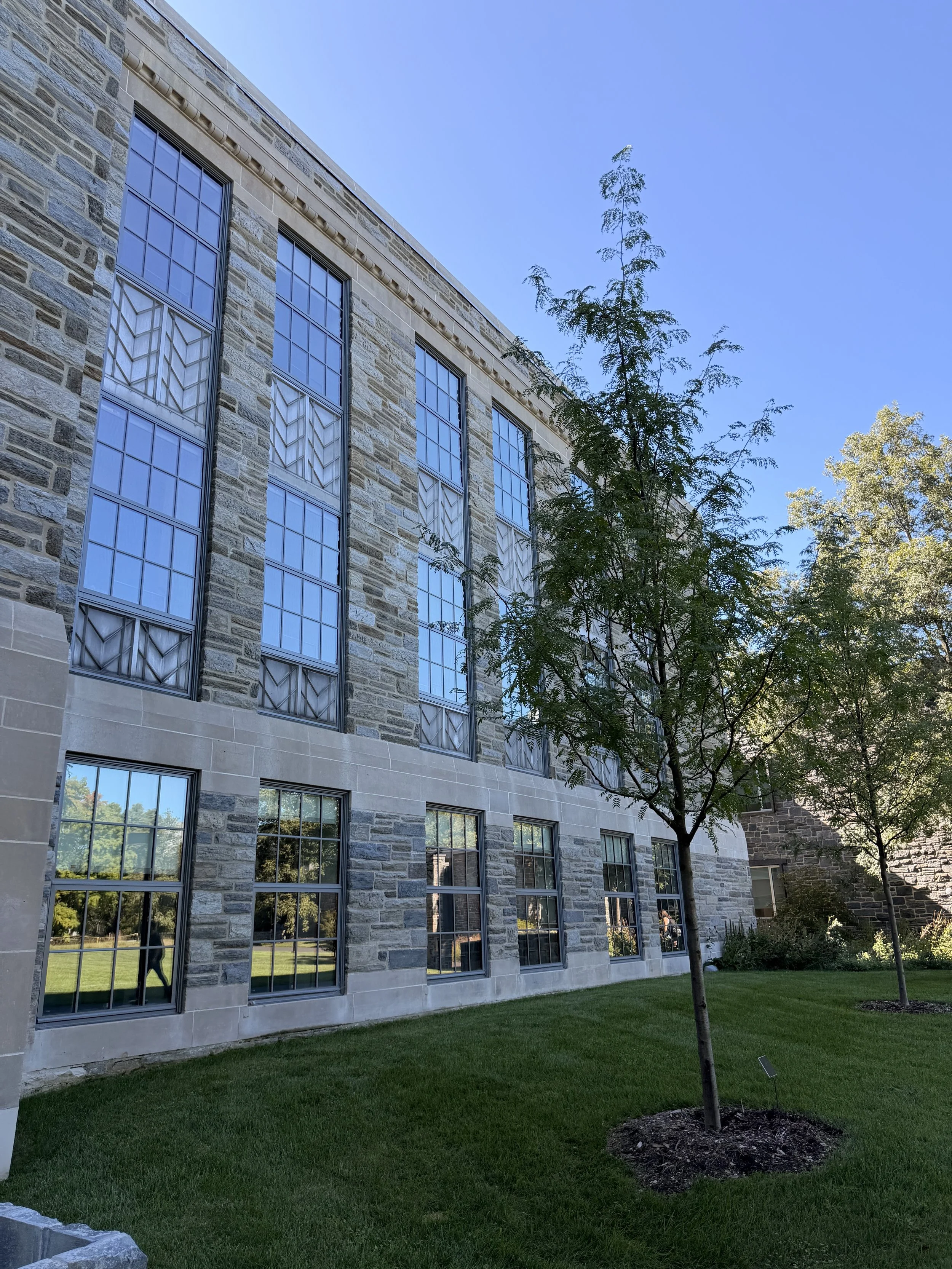
Swarthmore really believes in supporting students in the transition to college. To alleviate academic pressure and allow students to focus on getting adjusted, building new relationships, and adapting to their new environment, the entire first semester is graded Pass/Fail.
2. Swarthmore Tuition Guarantee
Swarthmore is a need-blind institution for domestic students, and is committed to meeting 100% of demonstrated financial need without the use of loans. Starting in Fall 2027, Swarthmore will cover tuition costs for students whose family makes $200,000 or less per year.

3. Tri-Co
Swarthmore is part of the Tri-College Consortium with Haverford College and Bryn Mawr College. Students can cross enroll in classes, join clubs and organizations, enjoy meals, access resources, and travel freely between the three campuses.
In addition to Tri-Co, students are also able to enroll in one class per semester at the University of Pennsylvania.

4. Cash-Free Campus
Swarthmore’s commitment to affordability extends to its no-hidden-fees policy on campus. All fees are included in the Cost of Attendance, so once students are on campus, they don’t need to pay for anything! This includes food, laundry, printing, shuttles, and even 8 rides per day on the train that connects Swarthmore with Center City Philadelphia.

5. Arboretum Campus
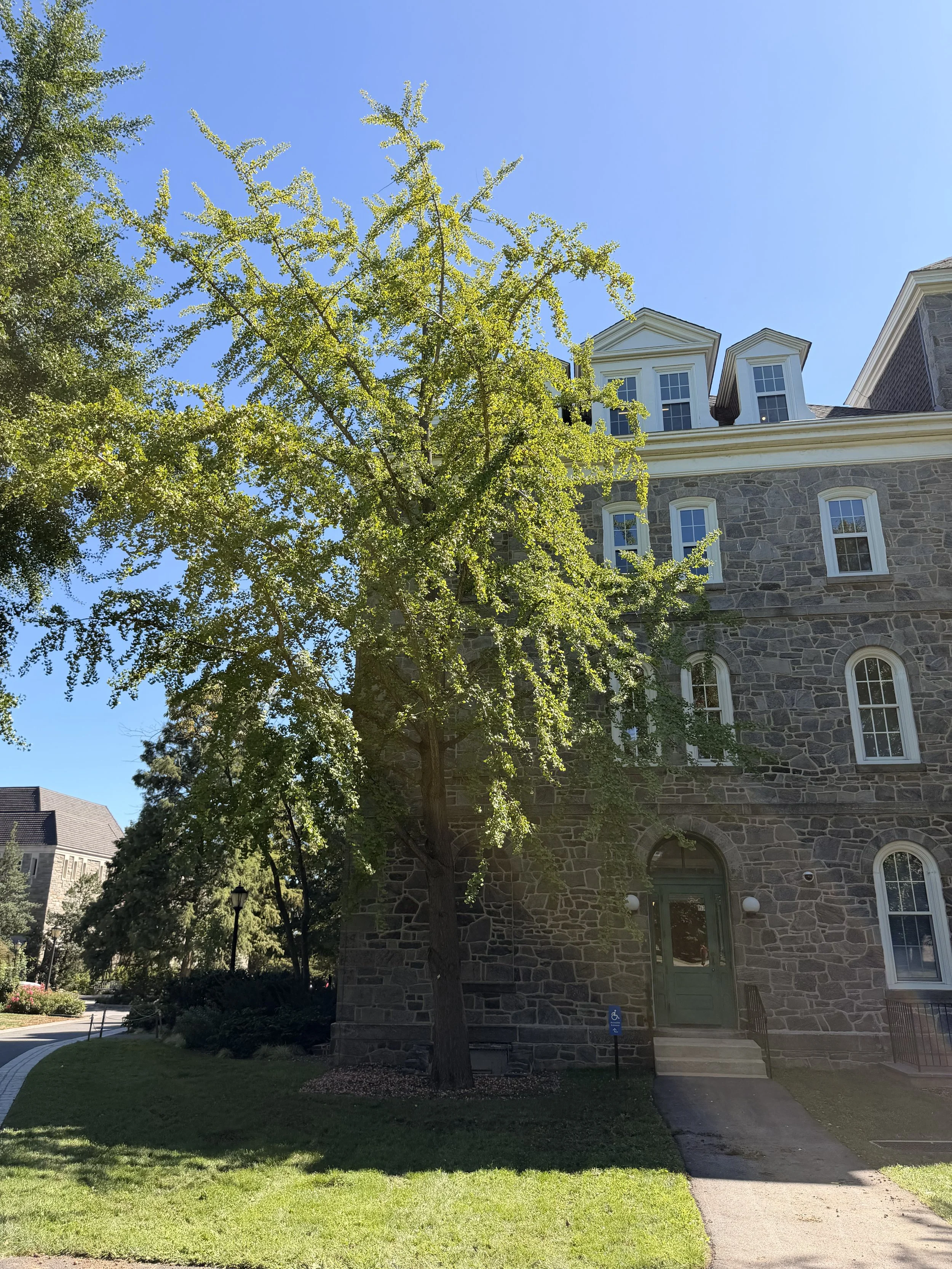
The Scott Arboretum and Gardens are fully integrated into the Swarthmore campus. Walking through campus, you’ll find thousands of varieties of plants and trees, all labeled with name plates, as well as bountiful lawns, Parrish Beach, and an outdoor amphitheater where students can study, relax, and spend time outside. Swarthmore is a green oasis just miles outside of Philadelphia, giving students the best of both nature and an urban life.
What You Need to Know About FAFSA’s New Identity Verification

Ready to file your FAFSA? Have a charged cellphone and government ID ready!
The New FAFSA ID Check: What Families Should Know Before They Log In
If you're gearing up to file the FAFSA this year, there's a new step in the process worth knowing about before you sit down at the computer. Beginning in April 2026, the Department of Education built a real-time fraud detection system directly into the FAFSA. Every submission is now screened automatically; most families won't notice a thing, but a small number will be asked, on the spot, to prove who they are.
How the screening actually works
As soon as a student submits the FAFSA, an automated system scores it for identity fraud risk: "low," "moderate," or "high." The Department hasn't published exactly what triggers a "high risk" score, so there's no reliable way to predict it in advance. Students who land in the "low" or "moderate" categories continue through the normal process with no extra steps, no extra documents, and no delay; this should cover most applicants.
Students flagged as "high risk," on the other hand, are prompted immediately, in that same session, to complete a live automated camera check using a smartphone or tablet and to present one valid piece of government-issued identification. If the check succeeds, the FAFSA is sent to colleges as usual and nothing further is required. If it fails or isn't completed, the submission is rejected, and the student must contact each college's financial aid office directly to finish verification in person.
Why we tell every family to have an ID within reach
Here's the piece that actually matters for your planning: if a student is flagged, the verification window is short, and it cannot be paused and resumed later. There's no option to finish the FAFSA now and come back with an ID tomorrow. An incomplete check simply results in a rejected submission, which then has to be sorted out manually with the college(s), adding real delay right when you're trying to lock in an aid offer.
That's why we recommend every student have valid, current identification and a smartphone or tablet with a working camera (fully charged) within reach whenever they sit down to submit the FAFSA, even if they never expect to be flagged. Accepted documents right now include a driver's license, a U.S. passport, a tribal identification card, or a permanent resident card. A state-issued non-driver ID card and a learner's permit aren't officially on that list yet, though indications in other Department of Education documents suggest they'll be accepted.
If your student doesn't drive and doesn't have a passport, we recommend applying for a state-issued non-driver ID as soon as possible rather than waiting for confirmation; many states require in-person applications, and getting the card back can take up to a month. We keep links to each state's application process on our website at college-matters.com/stateid.
A few questions we're hearing from families
Will every student have to go through this? No. Only applicants scored "high risk" are asked for a live ID check, and since the Department hasn't disclosed what raises that score, we're simply suggesting every family treat the ID and device as standard prep, not just the students they'd expect to be flagged.
Does this delay financial aid for most people? No. Applicants who aren't flagged, or who verify successfully, move through the normal timeline. Delay only shows up for the subset who fail or skip the live check and have to loop back through their college's financial aid office.
Where can we get the most current, official word? StudentAid.gov is the authoritative source, and the Department has continued to update its guidance since the April 2026 launch. If your student does get flagged, the fastest path to resolution is always the financial aid office at the specific college(s) in question.
If you'd like help thinking through the FAFSA, financial aid timelines, or any other part of the process, from freshman year on, we're happy to talk it through with you. Reach out to College Matters whenever you're ready.
Should I Submit an AP score of 3?

We get this question from students all the time! They know that a 3 is a solid score and shows mastery of the material in their AP class, but is it worth sending to colleges? And if they don’t send it, will the college assume that they got a 1 or a 2? Like many things in the college application process, it depends!
According to the College Board’s charts, AP score distributions vary widely. For example, fewer than 10% of students taking the AP Literature and Composition or AP Physics 1 scored a 5, while 45% of students earned the same 5 on the AP Calculus BC exam. The numbers are even higher for some of the World Languages and Cultures exams.
The first thing that you should do is check the AP Score credit policy for the colleges that you are applying to. If they will give you credit for the 3, then by all means, report it! On the other hand, if they only give credit for a 5 on that exam (not even for a 4), you may want to hold off.
The other thing to take into consideration is the selectivity of the college itself. As a general rule, the more selective the institution, the more applicants they will have with stellar AP scores. Think about how you will compare and make a call with that in mind!
The bottom line is to remember that a 3 is a very good score! Congratulate yourself for taking on the challenge and doing well!
Do I Need Tuition Insurance for College?

Surprises can happen — so it may be a good idea to have a plan!
Q: The college that my child is attending is offering the option of buying tuition insurance. Is it worth it?
A: Initially, we get quizzical looks from parents when we recommend that they consider purchasing tuition insurance for their first-year college student. “They’ve worked so hard so far, they’re not going to fail out!”
It isn’t that we’ve lost faith in the student’s ability to succeed in college. It is that we have witnessed times when tuition insurance alleviated a significant financial burden because of unforeseen circumstances.
Molly was in her second semester when her mother was diagnosed with cancer. She wanted to take a leave of absence to spend some time at home.
Bryce was a sophomore when he realized that he wanted to change his major, pretty drastically. He was already registered for classes for the spring that would not do him any good in making academic progress toward his ultimate goal and wanted to wait a semester to start again.
Jordan had a bad fall skiing over winter break — several broken bones and a severe concussion — and was advised not to return to college until their health was back to 100%.
Julia had always struggled with some anxiety but had everything under control until she had a particularly bad break-up. She needed to take some time to restore her mental health.
Austin was a recruited athlete. He couldn’t wait to start college until he was cut from the team in pre-season. He couldn't imagine not being a student-athlete and wanted to take a gap year and apply to transfer. But the tuition was already paid.
Abigail learned in August, just before she started packing the car for her freshman year, that she had come off the waitlist at her dream college.
We realize that not all policies would cover each of the situations listed above, so it is good to read the fine print before making a decision. But regardless, we recommend that it is worth taking a look!
Common App Essay Prompts for 2026-27

Get brainstorming…
The Common Application just announced the essay prompts for the upcoming admission cycle. Good news! They are remaining the same as 2025-26!
Below is the full list of prompts for 2026-2027.
Some students have a background, identity, interest, or talent that is so meaningful they believe their application would be incomplete without it. If this sounds like you, then please share your story.
The lessons we take from obstacles we encounter can be fundamental to later success. Recount a time when you faced a challenge, setback, or failure. How did it affect you, and what did you learn from the experience?
Reflect on a time when you questioned or challenged a belief or idea. What prompted your thinking? What was the outcome?
Reflect on something that someone has done for you that has made you happy or thankful in a surprising way. How has this gratitude affected or motivated you?
Discuss an accomplishment, event, or realization that sparked a period of personal growth and a new understanding of yourself or others.
Describe a topic, idea, or concept you find so engaging that it makes you lose all track of time. Why does it captivate you? What or who do you turn to when you want to learn more?
Share an essay on any topic of your choice. It can be one you've already written, one that responds to a different prompt, or one of your own design.

Should I Use AP Credit for College Classes? Thinking Pre-Med -- Maybe Not!
As a high school student with medical school aspirations, you've likely been encouraged to take Advanced Placement (AP) courses to demonstrate your academic prowess and prepare for the rigors of college. While high school AP classes are undoubtedly valuable, pre-med students should carefully consider whether to use their AP credits when entering college. Here's why:
Pre-Med Students MAY WANT TO Think Twice About Using AP Credit in College
As a high school student with medical school aspirations, you've likely been encouraged to take Advanced Placement (AP) courses to demonstrate your academic prowess and prepare for the rigors of college. While high school AP classes are undoubtedly valuable, pre-med students should carefully consider whether to use their AP credits when entering college. Here's why:
The Value of AP Classes in High School
Before we dive into the reasons for potentially forgoing AP credit in college, it's crucial to emphasize that taking AP classes in high school is still highly recommended for pre-med students. These courses:
1. Demonstrate your ability to handle challenging coursework
2. Prepare you for the pace and depth of college-level classes
3. Show admissions committees your commitment to academic excellence
4. Can boost your GPA and class rank
Why You Might Want to Retake Courses in College
Despite the benefits of AP classes in high school, there are several compelling reasons why pre-med students should consider retaking these courses in college:
1. Building a Solid Foundation
Medical school prerequisites are notoriously challenging. By retaking foundational courses like biology, chemistry, math, and physics in a college setting, you ensure a thorough understanding of these crucial subjects. This solid foundation will serve you well in upper-level courses and when preparing for the MCAT.
2. Boosting Your GPA
Medical schools have extremely competitive admissions processes. Retaking courses you've already been exposed to through AP classes can help you achieve higher grades in college, potentially boosting your overall GPA – a critical factor in med school applications.
3. Adapting to College-Level Expectations
While AP courses are designed to mimic college-level work, they don't always capture the full college experience. Retaking these classes allows you to adjust to college-level expectations, pacing, and teaching styles, which can be quite different from high school.
4. Forming Relationships with Professors
Letters of recommendation from college professors carry significant weight in medical school applications. By taking introductory courses, you have more opportunities to interact with professors and potentially secure strong recommendations. In addition, many successful applicants obtain research positions with faculty during their undergraduate years, further enhancing their preparation and candidacy.
5. Preparing for the MCAT
The Medical College Admission Test (MCAT) covers material from introductory-level college courses. Retaking these classes in a college setting ensures you're exposed to all the necessary content and helps reinforce your understanding of key concepts.
6. Medical School Prerequisites and GPA Considerations
Many medical schools do not accept courses fulfilled by AP credit as prerequisites or will not count them toward the student's science GPA. This is because AP credits often appear as pass/fail on college transcripts, which do not provide a clear indication of your mastery of the subject matter. By retaking these courses in college, you ensure that you meet medical school requirements and that your grades are factored into your science GPA, a crucial component of your application.
Conclusion
While it may be tempting to use AP credits to get a head start in college, pre-med students should carefully weigh the pros and cons. The potential benefits of retaking courses – including a stronger foundation, higher GPA, better preparation for the MCAT, more opportunities to connect with professors, and meeting medical school prerequisites – often outweigh the advantages of skipping ahead.
Remember, the goal isn't just to get through college quickly but to emerge as a well-prepared, competitive applicant for medical school. By strategically approaching your college coursework, you can set yourself up for long-term success in your medical career.
5 Reason to Love George Mason Univesity

Diversity
George Mason prides itself on creating a highly diverse student body that can learn from the backgrounds and perspectives of fellow classmates.

Support Services
In addition to academic, mental, and physical health services for all students, GMU hosts multiple programs to support students with Autism in their transition to college. The GMU campus is also entirely ADA-accessible!

Meals on Six Wheels
Food delivery robots. Need I say more?

Academic Focus
Students who thrive at GMU are those who embrace uniqueness and individuality. They are focused on their academic experience in college, and are highly motivated to come out of college prepared for the professional world.

Rural School with Access to DC
George Mason sits 20 miles outside of DC in a relatively rural area. The campus has lots of green space, and the ability to disconnect from everything going on in the capital city. However, there is a shuttle to take students to the metro so they can easily access everything Washington DC has to offer.
Are the College Essay Examples Online Good?

NO PEEKING!
Every year toward the end of the summer, the New York Times publishes sample college essays. I assume that they are looking to inspire rising seniors to begin writing their college essays if they haven’t already started; maybe reading others’ work provides a nudge to get going. Other colleges, like Tufts University, Johns Hopkins, and Connecticut College, post essays on their websites from prior application cycles that they have found especially compelling. Honestly, if you were to google “sample college essays,” you would probably find an endless supply of personal stories at your fingertips. Why not take a look for inspiration?
What we have discovered is the very act of reading other essays for inspiration often inhibits a student’s creativity. They consciously or subconsciously replicate what they have seen. It isn’t that they are necessarily copying an idea or plagiarizing text, but they tend to fit their idea into a structure, format, or theme that they have already read. After all, we are often patternmakers. Once we see something, we cannot unsee it. In the admissions process, the last thing you want to be is a carbon copy of anyone else. So, I encourage you to trust your own creativity and turn a blind eye to the “essay that worked.”
5 Reasons to Love American University

Access to DC
Located just 4 miles outside of downtown DC, American gives the best of both worlds! A residential campus with metro access to all of the perks of living in our nation’s capital.

Experiential Learning Opportunities
AU views Washington DC as an extension of the campus - providing students with unmatched access to internships, study abroad, guest lecturers, local events, museums, current events, and more!

Campus is a National Arboretum
With over 2,500 trees on campus, American University has been designated a national arboretum.

Collaborative Campus Culture
While AU is a highly academic, selective institution, it values collaboration over competition and fosters a learning environment that encourages collaborative success.

Trick-or-Treating on Embassy Row
Students rave about the campus tradition of going trick-or-treating on embassy row, where they have the opportunity to snag treats from all over the world.

5 Reasons to Love University of Hartford

1. LIBERAL ARTS + CAREER PREP
UHart’s seven colleges spanning career prep in rising professions and traditional liberal arts offer students abundant interdisciplinary opportunities.

2. SUBURBAN FEEL, CITY RESOURCES
UHart’s suburban campus has plenty of green space while also being a 10 minute drive from downtown Hartford’s internships and West Hartford’s restaurants and shopping.

3. HILLYER COLLEGE
Hillyer’s two-year curriculum gives students a structured, supportive academic environment to ease the transition to college-level work. Hillyer students finish the program on track to graduate in four years from another UHart school or college.

4. THE HARTT SCHOOL
“Turning passion into profession” for dancers, musicians, actors and other theater artists. Hartt is a conservatory that offers students the ability to minor in fields like communications and business through UHart’s other schools.

5. STUDENT LIFE
A strong athletic culture, high-quality performances and art shows on campus, 100+ clubs, and a therapy dog who makes house calls.
Have a question for a future “Ask the Consultant” post?
IN the Archive
- 5 Reasons 13
- Affordability 23
- Application Tips 11
- Ask the Consultant 52
- Athletes 6
- Career 7
- College Decisions 9
- College Visit 24
- Essay Writing 26
- Events 1
- Gap Year 3
- Grad School 8
- In the News 18
- Interviews 8
- Learning Differences 5
- Music 1
- News 28
- On the Road Again 6
- Parents 11
- Preparing 148
- Press 2
- Resume 9
- Starting Early 23
- Student to Student 16
- Testing 24
- Transfer 5
- Virtual Learning 2